
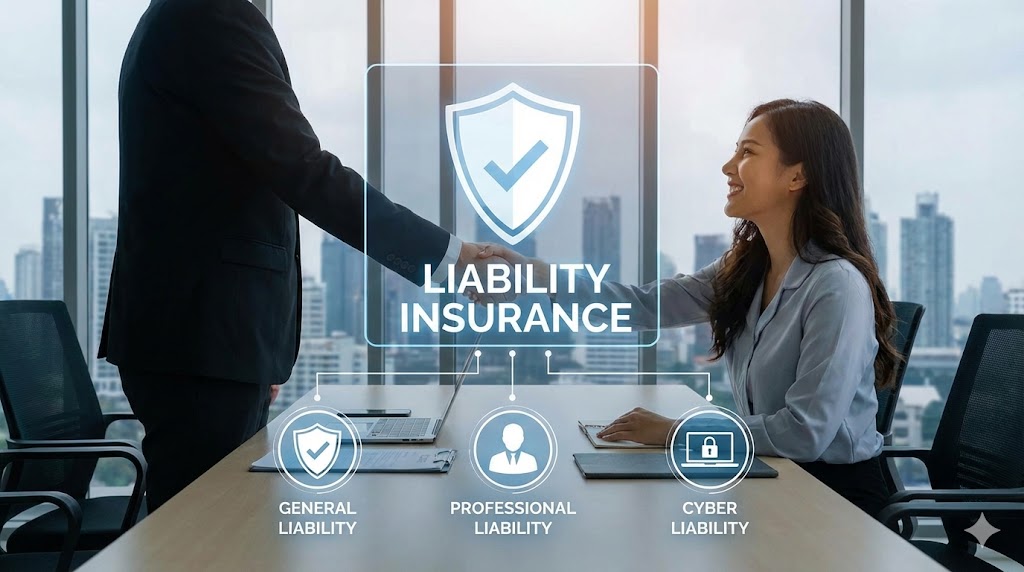
Starting a small business is a thrilling leap of faith. You have your business plan, your funding, and your first few clients. But amidst the excitement of launching a startup or managing a growing enterprise, there is one unglamorous but critical safety net you cannot afford to ignore: liability insurance.
In today’s litigious environment, a single lawsuit can bankrupt a thriving small business. Whether you are a contractor in California, a consultant in London, or running an e-commerce store from Toronto, the risks are universal. A customer trips in your office; a software bug you wrote causes a client to lose data; a product you sold malfunctions. Without the right coverage, these everyday accidents become financial catastrophes.
This comprehensive guide breaks down everything you need to know about small business liability insurance in 2025—what it covers, what it costs, and how to get the best quotes for your specific needs.
What Is Small Business Liability Insurance?
At its core, small business liability insurance is a financial shield. It protects your business assets from claims that your operations caused bodily injury, property damage, or financial loss to a third party.
Think of it as a buffer between your company’s bank account and the rest of the world. If you are sued, the insurance company steps in to pay for legal defense fees, settlements, and court-ordered judgments up to your policy limit.
For most business owners in Tier 1 markets like the USA, UK, and Canada, liability insurance is not just a “nice-to-have”—it is often a requirement. Landlords require it to sign a lease. Clients require it to sign a contract. State and provincial licensing boards often mandate it to issue a permit.
Why Do You Need It?
- Legal Defense Costs: Even if a lawsuit is frivolous, defending it can cost tens of thousands of dollars in attorney fees. Liability insurance covers these costs.
- Client Requirements: Large corporate clients will almost always demand proof of insurance (a Certificate of Insurance) before hiring you.
- Asset Protection: For sole proprietors and partnerships, a lawsuit could threaten personal assets like your home or car. Insurance prevents this piercing of the corporate veil.
Types of Liability Coverage: Breaking It Down
“Liability insurance” is actually an umbrella term. There isn’t just one single policy that covers everything. To be fully protected, you usually need a mix of different coverages tailored to your industry.
1. General Liability Insurance (GLI)
This is the foundation of any commercial insurance package. It is the most commonly purchased policy for small businesses in America.
What it covers:
- Bodily Injury: If a client slips on a wet floor in your shop and breaks an arm, GLI covers their medical bills and your legal fees.
- Property Damage: If you are a painter and accidentally spill paint on a client’s expensive antique rug, this pays for the cleaning or replacement.
- Personal and Advertising Injury: This sounds technical, but it covers non-physical harms like libel, slander, or copyright infringement in your marketing materials.
Who needs it? Almost everyone. If you have a physical location or interact with clients face-to-face, you need GLI.
2. Professional Liability Insurance (Errors & Omissions)
While GLI covers physical mishaps, Professional Liability (often called Errors and Omissions or E&O insurance) covers financial harm caused by your professional advice or services.
What it covers:
- Negligence: Failing to deliver a service as promised.
- Mistakes & Oversights: A tax preparer making a math error that costs a client thousands in penalties.
- Missed Deadlines: A web developer failing to launch a site on time, causing the client to lose revenue.
Who needs it? Consultants, accountants, real estate agents, architects, and IT professionals.
3. Business Owner’s Policy (BOP)
A Business Owner’s Policy (BOP) is a bundle designed specifically for small and medium-sized enterprises (SMEs). It combines General Liability with Commercial Property Insurance.
Why choose a BOP?
It is usually cheaper than buying liability and property policies separately. Insurers like The Hartford, Travelers, and Hiscox offer competitive BOP rates because they package low-risk profiles together.
4. Cyber Liability Insurance
As businesses move online, this has become a high-value keyword in the insurance sector for a reason. Data breaches are skyrocketing.
What it covers:
- Costs to notify customers of a data breach.
- Credit monitoring services for affected clients.
- Legal fees and fines for regulatory non-compliance.
- Ransomware payments (depending on the policy).
Who needs it? Any business that stores sensitive customer data (credit cards, social security numbers, health records).
5. Product Liability Insurance
If you manufacture, distribute, or sell physical goods, you are liable for their safety.
What it covers:
- Injuries caused by a defective product.
- Illness caused by food or beverages (vital for restaurants).
What Liability Insurance Does NOT Cover
Understanding exclusions is just as important as understanding coverage. A standard General Liability policy will not cover:
- Employee Injuries: If your employee gets hurt on the job, GLI won’t pay. You need Workers’ Compensation Insurance for that.
- Commercial Auto Accidents: If you crash your delivery van, GLI offers zero protection. You must have a dedicated Commercial Auto Insurance policy.
- Intentional Acts: If you punch a client or purposefully damage their property, insurance will not cover you.
- Punitive Damages: In some jurisdictions, insurance is not allowed to pay for punitive damages (money intended to punish the defendant rather than compensate the victim).
How Much Does Small Business Liability Insurance Cost? (2025 Rates)
Cost is the number one question for every business owner. “How much is this going to set me back?”
The truth is, rates vary wildly based on risk. A skydiving school will pay significantly more than a knitting circle. However, based on current market data for the USA, here are the average cost ranges.
Average Monthly Costs by Policy Type
| Policy Type | Average Monthly Cost | Average Annual Cost |
| General Liability (GL) | $40 – $65 | $480 – $780 |
| Business Owner’s Policy (BOP) | $55 – $100 | $660 – $1,200 |
| Professional Liability (E&O) | $50 – $150 | $600 – $1,800 |
| Workers’ Compensation | $45 – $120 | $540 – $1,440 |
| Cyber Liability | $120 – $200 | $1,450 – $2,400 |
Factors That Influence Your Premium
Insurers use complex algorithms to determine your “Commercial Insurance Quote.” Here are the biggest levers they pull:
- Industry Risk: Construction and healthcare are “high risk” and pay higher premiums. Marketing and IT are “low risk.”
- Location: A business in New York City or Los Angeles will pay more than one in rural Kansas due to higher local litigation rates and costs of doing business.
- Revenue: Higher revenue means more transactions and more potential for lawsuits.
- Number of Employees: More people working for you increases the statistical likelihood of an error or accident.
- Claims History: If you have been sued before, your premiums will skyrocket. A clean record keeps costs low.
- Coverage Limits: A policy with a $1 million limit costs less than a $5 million umbrella policy.
Real-World Scenarios: Who Needs What?
To make this practical, let’s look at three typical business profiles.
The Freelance Graphic Designer
- Risks: Copyright infringement claims, missed deadlines, unsatisfied clients.
- Recommended Coverage: Professional Liability (E&O).
- Estimated Cost: ~$50/month.
- Why: If a client claims your logo looks too much like a competitor’s and sues, this policy saves you.
The General Contractor / Handyman
- Risks: Dropping a hammer on a client’s foot, damaging a water pipe, employee getting hurt.
- Recommended Coverage: General Liability + Workers’ Compensation.
- Estimated Cost: ~$150 – $300/month (varies heavily by state).
- Why: Construction sites are dangerous. One injury claim can exceed $100,000 instantly.
The Coffee Shop Owner
- Risks: Slips and falls, burns from hot coffee, employee theft, fire in the kitchen.
- Recommended Coverage: Business Owner’s Policy (BOP).
- Estimated Cost: ~$80/month.
- Why: You need property coverage for your espresso machine AND liability coverage for your customers. A BOP bundles these perfectly.
How to Get the Best Business Insurance Quotes
Finding the right price involves a mix of smart shopping and knowing which levers to pull.
1. Compare Multiple Quotes
Never accept the first offer. Use aggregation sites like Insureon, Simply Business, or CoverWallet. These platforms allow you to input your data once and receive quotes from top-tier carriers like Chubb, Liberty Mutual, and Nationwide.
2. Bundle Your Policies
As mentioned with the BOP, bundling is the easiest way to save 10-20%. Ask your broker if you can combine your Auto, Property, and Liability policies.
3. Review Your Deductibles
Raising your deductible (the amount you pay out-of-pocket before insurance kicks in) lowers your monthly premium. If you have a healthy cash reserve, raising your deductible from $500 to $1,000 can drop your annual premium by 10%.
4. Ask for Industry-Specific Discounts
Some insurers specialize. For example, Next Insurance is known for great rates for fitness instructors and contractors. Embroker specializes in tech startups. Finding a niche carrier often results in better coverage for a lower price.
5. Risk Management Training
Some insurers offer discounts if you implement safety protocols, like workplace safety training for employees or installing security systems.
Top Providers for Small Business Insurance (USA, UK, Canada)
When searching for “business insurance near me,” you will encounter these major players. They are financially stable and have strong reputations for paying claims.
- The Hartford: Excellent for BOPs and established small businesses. Known for great customer service.
- Hiscox: A favorite for freelancers and consultants. They specialize in “micro-business” policies.
- Next Insurance: Digital-first, AI-driven. Great for contractors who need a certificate of insurance right now on their phone.
- Travelers: A giant in the industry. Good for larger small businesses with complex needs.
- Chubb: The premium option. If you have high-value assets or high-stakes clients, Chubb offers the broadest coverage, though often at a higher price point.
- Aviva (Canada/UK): A dominant player in the UK and Canadian markets for commercial liability.
Frequently Asked Questions (FAQ)
Is General Liability insurance required by law?
In most US states, General Liability is not required by state law for all businesses, but it is effectively mandatory. You likely cannot sign a commercial lease or a client contract without it. However, Workers’ Compensation and Commercial Auto insurance are legally required in most states.
What is the difference between “Claims-Made” and “Occurrence” policies?
This is a crucial distinction.
- Occurrence Policy: Covers you for any incident that happened during the policy period, even if the claim is filed years later after you cancelled the insurance. (Recommended).
- Claims-Made Policy: Only covers you if the policy is active both when the incident happened AND when the claim is filed. If you cancel your policy, you lose coverage for past work unless you buy “tail coverage.”
Can I get business insurance for one day?
Yes. “Event Insurance” or specialized short-term liability policies exist for vendors who only need coverage for a weekend market or a specific project. Apps like Thimble specialize in this episodic insurance.
Does my LLC protect me? Do I still need insurance?
Yes, you absolutely still need insurance. An LLC protects your personal assets from business debts, but it does not stop you from being sued. If your business has no insurance and loses a lawsuit, the business typically must liquidate its assets to pay the judgment. Insurance protects the business’s money.
How do I get a Certificate of Insurance (COI)?
Once you purchase a policy, your insurer will provide access to an online portal. You can usually download a PDF Certificate of Insurance instantly to email to a client or landlord.
Conclusion
Navigating the world of Small Business Liability Insurance can feel overwhelming, but it is a fundamental step in legitimizing and protecting your hard work. It is the difference between a bad month and a bankrupt business.
Don’t wait for a lawsuit to serve as your wake-up call. Whether you need a simple $500/year General Liability policy or a complex package including Cyber and Professional Liability, the market is competitive right now.
Actionable Next Step: Take 15 minutes today to audit your risks. If you are uninsured, go to a comparison site and get three quotes. If you are already insured, check your renewal date and see if shopping around could save you money or get you better coverage limits for 2025. Your peace of mind is worth the premium.
